The Goddess in the Word: What "Diva" Really Means
Someone called me a diva the other day.
They meant it as a compliment. I could tell by the way they said it, eyes wide, a little breathless after a performance. And I smiled, because I understood what they were reaching for. They were trying to say something about the music, about what had just happened in that room. But the word landed differently than they intended, because I know where that word comes from. I know what it used to carry. And I've watched, over the years, as the world slowly emptied it out.
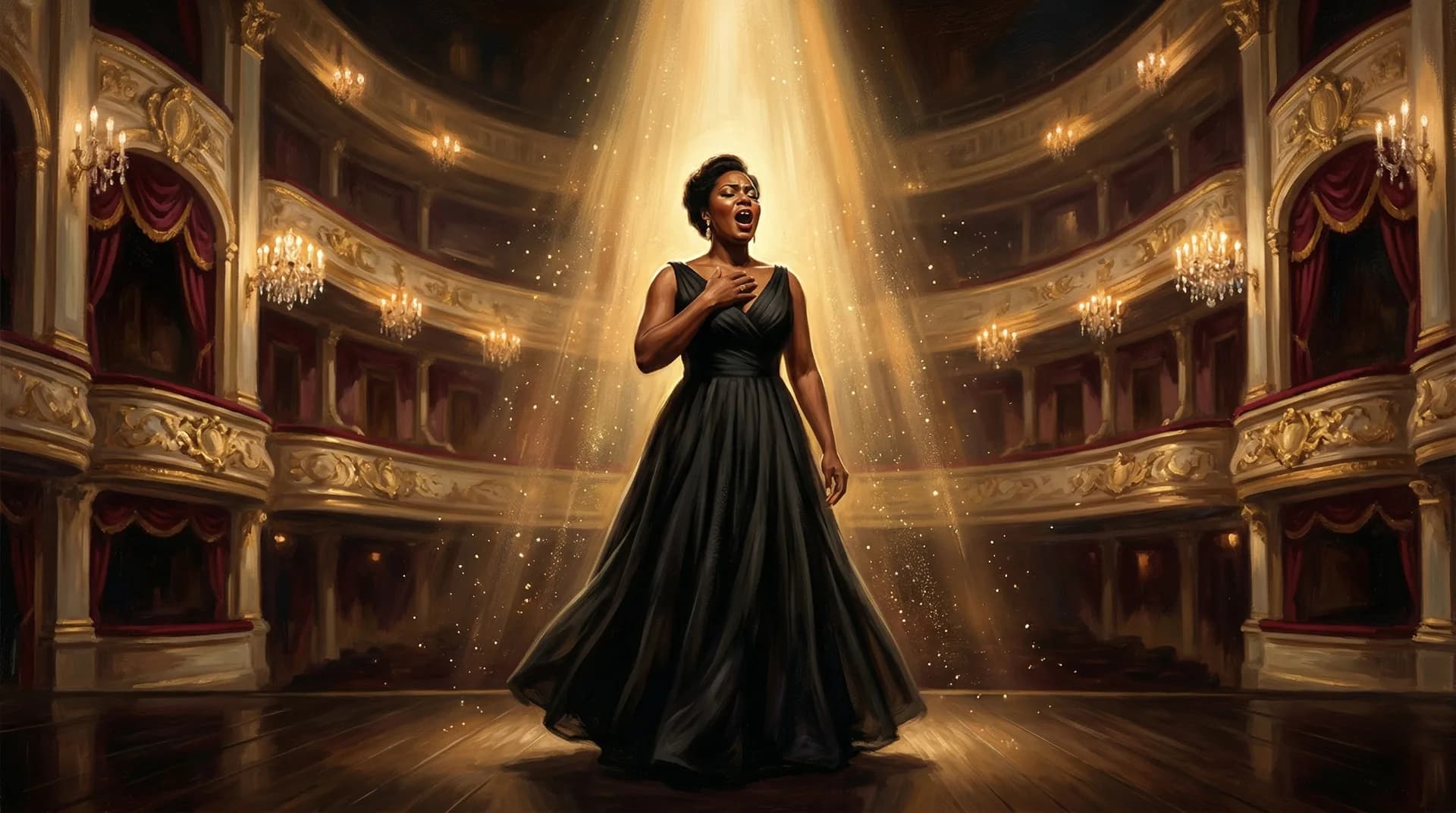
Diva comes from the Latin divus, meaning divine. Goddess. In Italian, diva is the feminine of a word that describes beings who have transcended the mortal. When the term first entered English in the late nineteenth century, it meant one thing and one thing only: a female opera singer of such extraordinary ability that her voice seemed to belong to something beyond this earth.
Think about that for a moment. The word wasn't invented to describe someone who makes demands backstage or throws a fit about the wrong color roses in a dressing room. It was invented for a woman whose instrument, her own body, her own breath, could silence a hall of a thousand people and make them forget, for a few measures, that they were merely human.
I think about the women who first carried that title. I think about Maria Callas, who could break your heart in the middle of an aria and make you grateful for the damage. I think about Leontyne Price, a woman I have had the honor of meeting more than once, and to whom I have been compared in my earlier years when I was performing opera more regularly, including my time with the Mobile Opera. Miss Price didn't just sing. She testified. When she opened her mouth, you heard centuries of tradition, discipline, and devotion pouring through a single voice. She was divine in the truest sense of the word. That is what diva means.
Turn on your television today, though. Scroll through social media for five minutes. You'll hear the word thrown around like confetti at a parade. Applied to reality television personalities. To pop singers who lip-sync through arena tours. To anyone with a strong personality and a ring light. The word that once described a woman who had spent decades mastering the most demanding vocal art form in human history now gets tossed at someone for posting a selfie with the right attitude.
I don't say this to diminish anyone's talent. There are extraordinary singers working across every genre, and I have deep respect for artistry wherever it lives. But words matter. When we flatten a word like diva, when we strip it of its weight and history and apply it to everything indiscriminately, we lose something. We lose the ability to name the thing that happens when a trained voice, refined over years and years of sacrifice, meets a piece of music that demands everything from the singer and gives everything back to the listener.
Classical vocal training is not glamorous. It is hours of scales and breath work. Learning to support a note from your diaphragm while your body wants to collapse. Studying languages, Italian, French, German, Latin, not because they look impressive on a program, but because the music requires it. Learning to project your voice across an orchestra and into the back row of a concert hall with no microphone, no amplification, nothing between you and the audience but air and intention.
And for those of us who come from the sacred music tradition, who have spent our lives singing Negro Spirituals, gospel, the great hymns of the faith, there is a spiritual dimension that goes even deeper. When I sing, I am not performing. I am offering. There is a difference. The voice becomes a vessel for something larger than the singer. That is what the original divas understood. Their art was not about ego. It was about surrendering to the music, to the composer's intention, to the moment, to God.
The word diva was born in the opera house, and it carried a specific meaning: here is a woman who has given her life to an art form so demanding that when she performs it at the highest level, we have no choice but to call her divine. That's not elitism. That's precision. It's the difference between calling every hill a mountain and reserving the word for Everest.
I've been called a diva many times in my career. And when the word is used the way it was meant, as recognition of the years of work, the discipline, the spiritual commitment, the tradition I carry from New Orleans to the stages of Europe, I wear it with pride. It connects me to a lineage of women whose voices shook the foundations of concert halls and cathedrals alike.
But when I hear the word used carelessly, I feel a small grief. Not for myself, but for the word. For the history it holds. For the women who earned it in ways most people can no longer imagine.
So the next time you hear someone called a diva, pause for a moment. Ask yourself: Is this someone whose art approaches the divine? Because that's the bar the word was built for. And it's a bar worth remembering.