Pourquoi les Negro Spirituals ne sont pas que des chansons
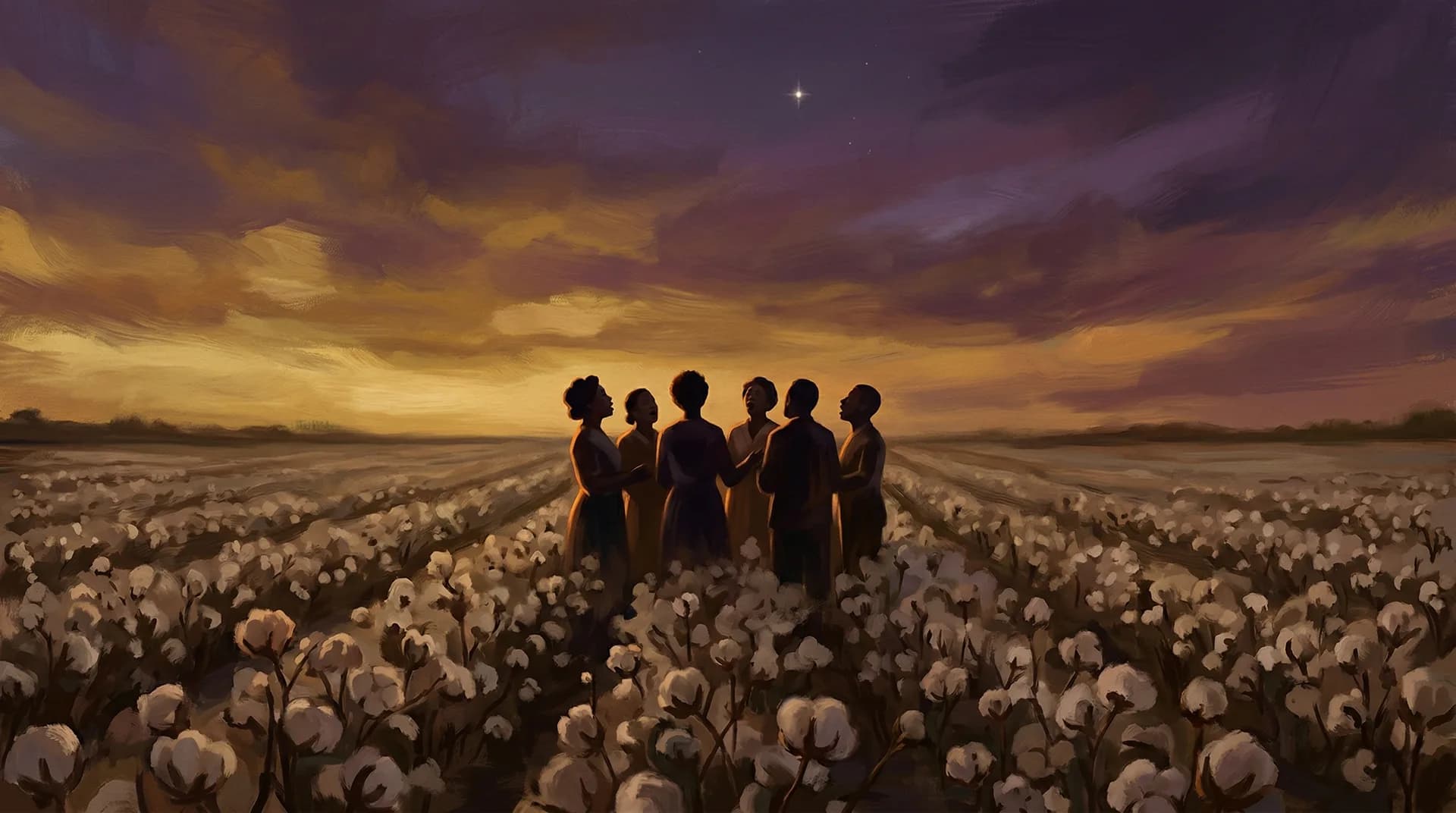
Quand je me dresse devant un public, que ce soit dans une salle de concert à Madrid ou une cathédrale à Lyon ou sur une scène de festival aux îles Canaries, et que j'ouvre la bouche pour chanter un Negro Spiritual, je n'interprète pas une chanson. Je porte une prière que quelqu'un a chantée dans un champ il y a deux cents ans, sous un ciel qu'il n'avait pas choisi, dans une langue qui lui avait été imposée, à propos d'un Dieu qu'il s'était approprié.
Cette distinction compte pour moi plus que presque tout autre chose dans mon travail de chanteuse. C'est la raison pour laquelle je tressaille, doucement, quand j'entends quelqu'un décrire ces œuvres comme de « vieilles chansons » ou de la « musique folk » ou des « hymnes traditionnels », comme s'il s'agissait d'artefacts pittoresques d'un chapitre achevé de l'histoire. Les Negro Spirituals ne sont pas des reliques. Ils sont des documents vivants de foi, de résistance, d'une intelligence si profonde qu'elle a caché la liberté dans un hymne et la survie dans une mélodie.
Nés dans l'esclavage, élevés dans la foi
L'histoire du Negro Spiritual commence dans les pires circonstances. À partir de 1619, des Africains réduits en esclavage furent amenés dans les colonies américaines et systématiquement dépouillés de leurs langues, de leurs instruments, de leurs pratiques culturelles et de leurs noms. Mais il y avait une chose que leurs ravisseurs ne pouvaient leur prendre : leurs voix.
En Afrique, la musique avait été tissée dans chaque partie de la vie quotidienne. Célébrations, deuil, travail, culte. Quand les esclaves furent introduits au christianisme, ils trouvèrent dans la Bible des histoires qui reflétaient leurs propres souffrances avec une précision saisissante. Les enfants hébreux en captivité en Égypte. Daniel dans la fosse aux lions. Moïse menant son peuple vers la liberté. Josué aux murs de Jéricho. Ce n'étaient pas des paraboles abstraites pour des gens vivant dans les chaînes. C'étaient leurs histoires, racontées à nouveau dans une langue nouvelle.
Et ainsi ils chantèrent. Dans les maisons de louange et les réunions sous les tonnelles de branchages. Dans les champs et le long des berges. Dans la tradition du chant et de la réponse portée depuis l'Afrique de l'Ouest, où un meneur chantait une ligne et la communauté répondait. Ils créèrent une forme entièrement nouvelle d'expression musicale, une forme que les chercheurs reconnaîtraient finalement comme l'un des plus grands et plus significatifs corpus de musique folklorique américaine jamais produits. Il y a environ six mille Spirituals connus dans les archives, et ce nombre ne représente probablement qu'une fraction de ce qui a existé autrefois, car ces chansons naquirent dans une tradition orale parmi des gens à qui la loi interdisait de lire ou d'écrire.
En 2007, le Congrès des États-Unis a adopté à l'unanimité des résolutions jumelles reconnaissant le Spiritual afro-américain comme Trésor national. Cette désignation avait déjà été accordée au Rock and Roll et au Blues, qui tous deux trouvent leurs racines directement dans les Spirituals eux-mêmes.
Plus que ce que l'oreille entend
L'une des choses les plus remarquables à propos des Negro Spirituals est qu'ils opéraient souvent à plus d'un niveau de signification à la fois.
En surface, un Spiritual pouvait ressembler à une chanson sur le paradis, sur la traversée du Jourdain, sur le fait d'être porté à la maison par les anges. Et c'était cela. Véritablement, sincèrement, une chanson de foi. Mais sous la surface, ces mêmes mots pouvaient porter un message entièrement différent. La beauté de la chose était que les esclaves pouvaient chanter ces chansons ouvertement, à portée d'oreille du maître d'esclaves, et le maître n'entendait rien d'autre qu'un hymne.
Frederick Douglass, le grand abolitionniste qui avait lui-même été esclave, a écrit directement à ce sujet dans son autobiographie. Il se rappelait avoir chanté « O Canaan, sweet Canaan, I am bound for the land of Canaan » et notait qu'un auditeur attentif aurait pu détecter quelque chose de plus qu'un espoir d'atteindre le paradis. Ils voulaient dire atteindre le Nord. Le Nord était leur Canaan.
Harriet Tubman, la plus célèbre conductrice du chemin de fer clandestin, utilisait les Spirituals comme outils opérationnels. Sa biographe Sarah Bradford a documenté comment Tubman chantait « Go Down, Moses » pour signaler aux esclaves qu'elle était dans la région et prête à les mener vers le nord. Elle ajustait le tempo de son chant pour indiquer si le moment était sûr pour s'échapper ou si le danger était proche.
Ce ne sont pas des légendes. Ce sont des récits documentés de sources primaires.
Maintenant, je veux être honnête sur quelque chose, car l'exactitude m'importe. Les chercheurs ont longtemps débattu de l'ampleur réelle de l'usage des Spirituals codés. Certaines des affirmations les plus dramatiques, que des chansons spécifiques contenaient des cartes d'évasion détaillées, par exemple, sont difficiles à vérifier, précisément parce que la tradition orale n'a laissé aucune trace écrite et parce qu'aider à l'évasion était illégal. La vérité complète de ce que portaient ces chansons pourrait ne jamais être entièrement récupérable, car les gens qui les ont créées se sont vu délibérément refuser les outils pour documenter leur propre histoire.
Mais ce que nous savons est suffisamment extraordinaire. Nous savons que ces chansons opéraient simultanément à plusieurs niveaux de signification. Nous savons que Tubman et Douglass et d'autres les utilisaient comme outils de communication. Et nous savons que les gens qui les ont créées étaient assez brillants pour cacher la liberté dans un hymne, la résistance dans une berceuse, et des directions dans une prière, tout cela pendant que leurs ravisseurs n'entendaient rien d'autre que du chant.
Chansons que je porte
Permettez-moi de vous faire découvrir quelques-uns des Spirituals avec lesquels j'ai vécu la plupart de ma vie. Ce sont des chansons que j'ai enregistrées avec le Moses Hogan Chorale sur l'album Negro Spirituals, et des chansons que je continue d'interpréter sur des scènes du monde entier. Je vous invite à écouter en lisant.
"Wade in the Water" semble parler de baptême, de Dieu troublant l'eau, des fidèles marchant dans le courant. Et c'est une chanson baptismale. Mais c'était aussi un conseil désespérément pratique. Si vous couriez et étiez poursuivi, vous entriez dans l'eau. Les chiens ne peuvent suivre une piste à travers une rivière. Marcher dans l'eau, c'était disparaître.
"Swing Low, Sweet Chariot" est peut-être le Spiritual le plus aimé au monde. Les gens le chantent lors d'événements sportifs. Ils le chantent aux funérailles. En surface, c'est une chanson sur la mort et le fait d'être porté au paradis. Mais dans le contexte de l'esclavage, le chariot était le chemin de fer clandestin. La bande d'anges étaient les conducteurs. Swing low signifiait venir vers le sud. Carry me home signifiait m'emmener vers la liberté dans le Nord.
"My Soul's Been Anchored in de Lord" est une chanson avec laquelle j'ai une connexion particulière, car je l'ai chantée comme soliste vedette sur l'enregistrement. C'est une déclaration de foi si profonde que rien ne peut l'ébranler. Le chanteur dit : J'ai traversé des choses qui auraient dû me détruire, et je suis toujours là, et mon âme est toujours ancrée. Pour les esclaves, ce genre de conviction inébranlable n'était pas de la théologie abstraite. C'était la survie. Ancrer son âme signifiait s'accrocher à son humanité quand tout autour de vous était conçu pour vous la retirer.
"I've Been 'Buked" est une chanson de tristesse qui porte un poids historique énorme. 'Buked signifie réprimandé. Méprisé, dont on a parlé, irrespéctueux. Le chanteur nomme la réalité de ce que signifie vivre sous le mépris et choisit, dans le souffle suivant, de ne pas abandonner sa foi. C'est la chanson que Mahalia Jackson a chantée devant une foule de 250 000 personnes lors de la Marche sur Washington en 1963, moments avant que Dr. Martin Luther King Jr. ne prononce son discours « I Have a Dream ». King a écrit à Jackson cinq mois plus tard que quand il s'est levé pour parler, il était déjà heureux, et qu'elle, plus que toute autre personne, avait aidé à en faire sa plus grande heure. Quand je chante cette chanson, j'entends sa voix sous la mienne.
"Soon Ah Will Be Done" est une chanson d'endurance. « Soon I will be done with the troubles of the world, going home to live with God. » En surface, elle parle de la promesse du repos après la mort. Mais pour les esclaves, les troubles du monde n'étaient pas métaphoriques. C'était le fouet, le bloc d'enchères, la famille déchirée. Chanter « soon I will be done » était déclarer que cette condition était temporaire, qu'elle ne durerait pas, que quelque chose de meilleur arrivait, que ce soit dans cette vie ou la suivante. Il y a une férocité dans la douceur de cette chanson qui me touche encore chaque fois que je la chante.
"Ain't That Good News" est différente des autres. C'est un jubilé, une célébration. Après toutes les chansons de tristesse, après tous les messages codés et les plans d'évasion chuchotés, il y avait aussi des chansons de joie pure et sans garde. De bonnes nouvelles arrivent. J'ai une couronne dans le royaume. C'est le son de gens qui, face à tout, trouvaient encore raison de se réjouir. Non parce que leurs circonstances le justifiaient, mais parce que leur foi l'exigeait. Ce genre de joie n'est pas naïf. Il est radical.
Pourquoi cela importe maintenant
J'ai passé une grande partie de ma carrière à chanter ces chansons loin de la terre où elles sont nées. Je les ai chantées en Espagne, en France, en Belgique, aux Pays-Bas, en Allemagne, en Grèce, au Portugal, en Australie. J'ai vu des publics qui ne parlent pas anglais pleurer au son d'un Spiritual, non parce qu'ils comprenaient chaque mot, mais parce que la musique elle-même porte une vérité qui transcende le langage.
Quand j'étais adolescente, voyageant avec le Moses Hogan Chorale et plus tard les Moses Hogan Singers sous la direction du regretté, grand Moses Hogan, un fils de La Nouvelle-Orléans comme moi dont les arrangements de ces chansons ont revitalisé toute la tradition, j'ai commencé à comprendre qu'interpréter des Spirituals n'était pas comme interpréter toute autre musique. Moses nous a enseigné que ces chansons exigeaient quelque chose de différent du chanteur. Elles exigeaient que vous compreniez non seulement les notes et les rythmes et les harmonies, mais l'histoire. La souffrance. La foi. La défiance. Vous ne pouviez pas simplement chanter un Spiritual. Vous deviez le ressentir.
Les deux albums de Negro Spirituals que j'ai enregistrés avec ces ensembles sont maintenant conservés dans la collection permanente de la Bibliothèque nationale de France, la bibliothèque nationale de France. J'y pense parfois. Des chansons qui ont été créées par des gens à qui on refusait le droit d'écrire leurs propres noms sont maintenant conservées dans l'une des archives culturelles les plus anciennes et les plus respectées au monde. Ce n'est pas de l'ironie. C'est la justice.
Ces chansons méritent d'être comprises pour ce qu'elles sont vraiment : des actes de création nés des conditions les plus brutales de l'histoire américaine, chantés par des gens à qui on disait qu'ils étaient moins qu'humains et qui ont répondu en produisant un art si profond, si durable, si divin que le Congrès des États-Unis l'appellerait un jour Trésor national.
Elles ne sont pas de vieilles chansons. Elles ne sont pas pittoresques. Elles ne sont pas simples.
Elles sont le son d'un peuple qui a refusé d'être réduit au silence. Et chaque fois que j'en chante une, je les entends. Toujours en train de chanter. Toujours libres. Toujours intacts.